
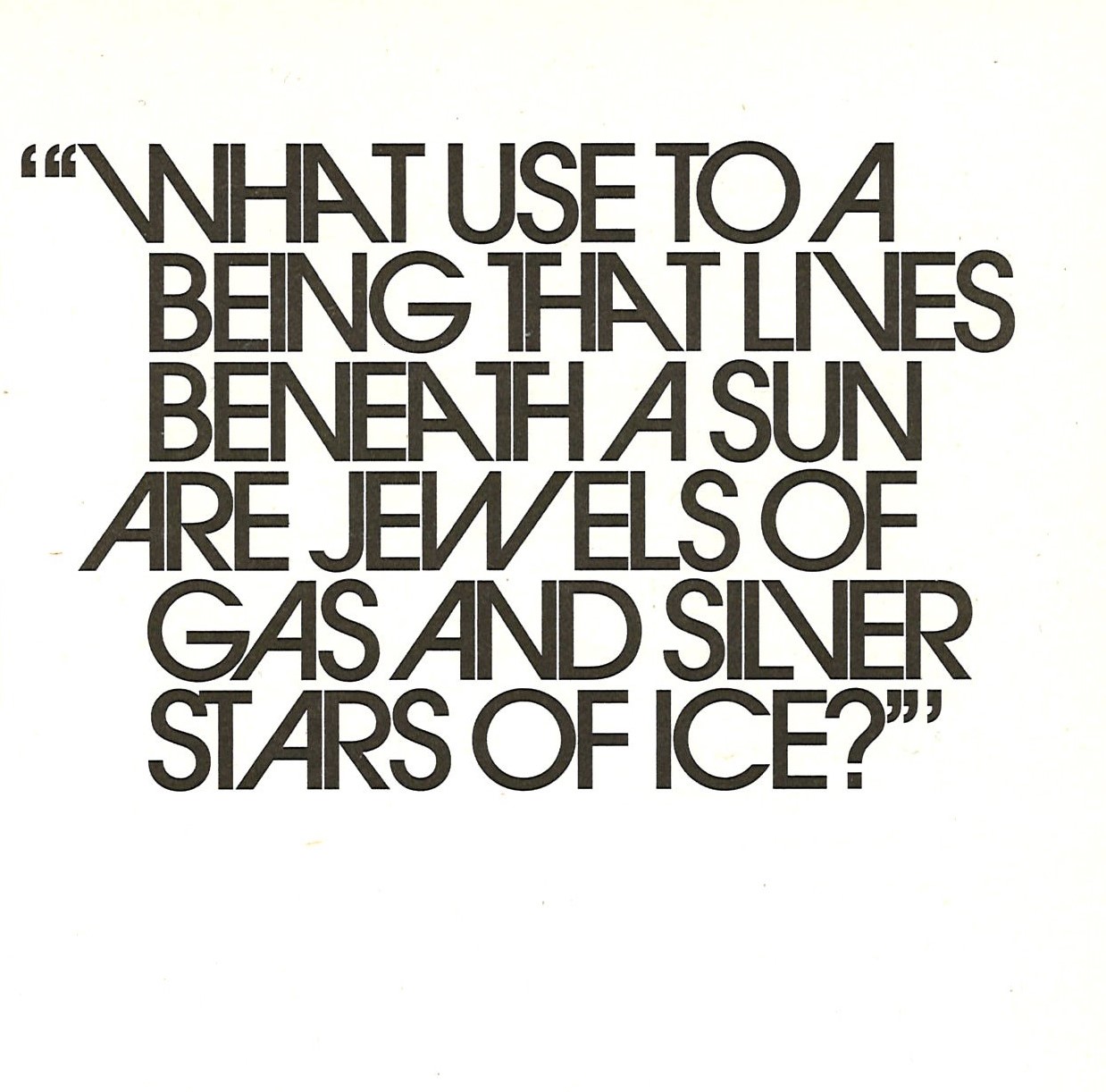
Science Fiction Review | 500 Words | The Three Electro-Knights by Stanislaw Lem

Regardless of whatever sci-fi label you choose to apply to yourself (sf writer, reader, fan etc.), it is usually a good idea to read, watch or listen to work by the Greats (capitalisation intended). The beauty of such a tactic though is that what and who each person considers to be great are deeply personal. I may not like a particular piece of science fiction whilst you may love it! Likewise for a particular sf author.

So the question is, what aspects of sci-fi stories and novels do you value? For me, most of the time, it’s about the lyricism of the prose and the imagination of the writer. These are showcased in a variety of ways, of course, but I’m usually quick to sift through a piece and point them out effortlessly (yes, yes, granted, I am looking for them!).

Stanislaw Lem mastered the exploitation of these elements. The lyricism in his The Three Electro-Knights is both beautiful and subtle but also impactful, bouncing from sentence to sentence with a natural cadence and lilt to the words (“He built himself a digital midget-widget that sweetly sang”; “scientists did marvel to find in among the atomic spectra flickering valentines”).  It is easy to see here that good writing is little effort as long as you choose the right words. That’s the hard part though, and it separates the giants from the commoners, the Lems from the lemmings!

When I read a piece of science fiction, I want to be able to visualise the world that the author and their characters are immersed in. For me, colours and key descriptors are stand-outs. I’d go so far as to say that they are key ingredients in world building, irrespective of genre. In The Three Electro-Knights, Stanislaw Lem successfully and effortlessly utilises colours and descriptors so you are able to feel the “intense cold,” see the “sunless void,” “palaces of ice” and polar lights of “lemon yellow and silver” (such effective specificity!), and even see the Cryonids mountains and the whole of Cryonia, metaphorically sitting “like a jewel rotated slowly on black velvet”. Beautiful! 

Lem’s characters, like the world they inhabit, are larger than life too. The story’s characters and the world building process indeed help to fill the aforementioned world of ice and snow! It’s a story of creation through the creation of a story, concisely and expertly told by a renowned sci-fi author.

And finally, what is a science fiction story without the science? One can interpret the impact of scientific phenomena on the characters in a simplistic sense in one regard but then interpret it artistically in another way to garner a particular meaning or feeling. Little scientific details help the story to develop and feel rewarding. And who denounces sci-fi for its lack of literary merit?!So read The Three Electro-Knights. If nothing else, it’s a delightful introduction into Mr Lem’s work, and it may help you build up the stamina to read his larger pieces (hello there Solaris!).
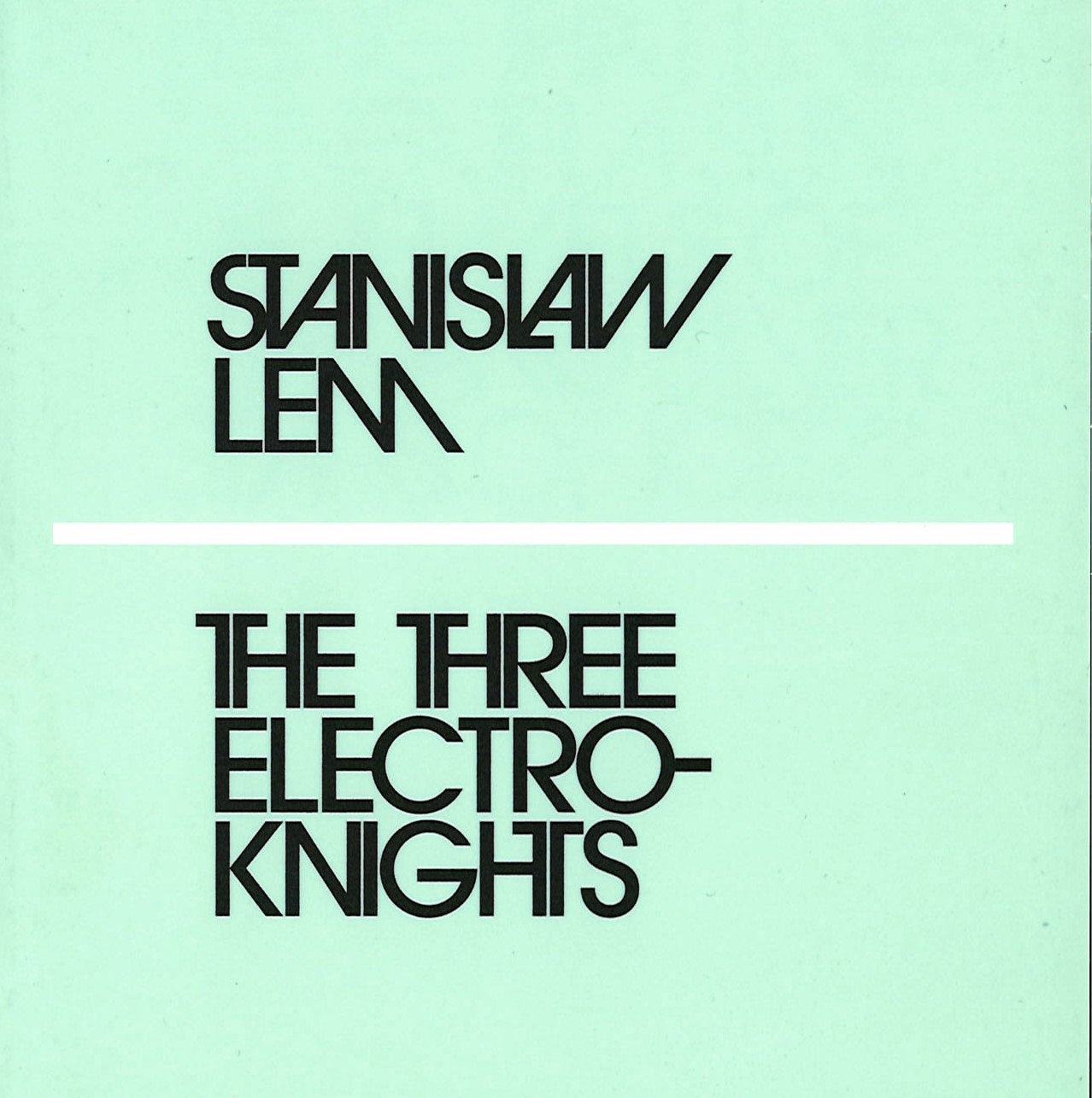
Sci-Fi Review | 1000 Words | The Three Electro-Knights by Stanislaw Lem

If you’re an aspiring science fiction writer or avid reader, or plain old sci-fi fan, you could do well to read works by the greats. I suppose that’s the case for any genre really. What you declare to be great, however, is likely to be deeply personal. What I choose to focus on in a piece of sci-fi writing, you may choose to ignore with equal passion.

For me, the lyricism of the prose and the imagination of the writer are important and easily discernible, and I can often sift them out with little effort after one or two readings (some are more overt than others, of course!). Some writers easily set themselves apart from the rest in this way due to a mixture of ability, imagination and, yes, perseverance. Naturally, being a passive spectator-aspiring sf writer in this process can be deflating (you may long to have such ability!) but in other ways, it’s a delight and something you want to cherish. The medium of the short story provides a concentrated form of such delight, with authors utilising the conciseness of a piece to best tell a story in their own economical and (for the most part) unique style.

Take, for example, Stanislaw Lem’s The Three Electro-Knights. Almost immediately you are hit with a lyricism that is both beautiful and subtle but also impactful, bouncing from sentence to sentence with a natural cadence and lilt to the words (“He built himself a digital midget-widget that sweetly sang”; “scientists did marvel to find in among the atomic spectra flickering valentines”). I could only hope to have such ability! When you then read on, you see that such turns of phrase have been supported by a simple wider language and construction that helps to cultivate awe in the awesome world Lem speaks of. The writing is, in turn, poetic and alluring but also practical. Consider the impact of the inclusion of “crystalline” and “frozen” in their respective sentences, for example (“His intention was to construct from water beings truly beautiful and wise, therefore crystalline”; “cut mountains of ice from its frozen ocean…”). How visually arresting are such lines? Good writing is little effort as long as you choose the right words. That’s the hard part though, and it separates the giants from the commoners, the Lems from the lemmings!

Colours and key descriptors in prose help readers visualise the world they are immersed in too. In that regard, one could say that it is a key element to world building, irrespective of genre (but how rewarding is world-building in science fiction?). In The Three Electro-Knights, Stanislaw Lem is really successful here too. With little effort you are able to feel the “intense cold,” see the “sunless void,” “palaces of ice” and polar lights of “lemon yellow and silver” (such effective specificity!), and even see the Cryonids mountains and the whole of Cryonia, metaphorically sitting “like a jewel rotated slowly on black velvet”. Beautiful!  

So the world has been built for us, the scene has been set, and now it’s time to fill it with a group of characters that pique our interest and make us want to keep reading. Lem’s characters, like the world they inhabit, are larger than life. In fact, they are the world they inhabit, metaphors utilised to explain the formation of this world in a similar vein to those told in religious texts. Brass soon becomes a mountain of ice, Iron becomes a mountain himself and Quartz, well, he has more success in his endeavours than do the other two. And let’s not forget the inhabitants Boreal, Albucid, Astrobert and Brrr. The story’s characters and the world building process indeed help to fill this world of ice and snow! It’s a story of creation through the creation of a story, concisely and expertly told by an unassuming author.

And finally, what is a science fiction story without the science? One can interpret the impact of scientific phenomena on the characters in a simplistic sense in one regard but then interpret it artistically in another way to garner a particular meaning or feeling. For example, we read of the impact of liquid helium on steel, oil congealed in joints, sparks flying and jewels of noble gases. Nothing special out of context here, all quite basic details in fact, but then Stanislaw Lem’s literary talent emerges further here so that we can feel how the “steel innards gurgled” and Iron became like a snow giant (with an inability to rise due to his seizing joints), Quartz charging and striking the ice walls of the Cryonic capital, Frigida, and him finally taking jewels of “argon, krypton and xenon,” which subsequently evaporate due to heat. Little scientific details help the story to develop and feel rewarding. And who denounces sci-fi for its lack of literary merit?!

If you choose to read The Three Electro-Knights by Stanislaw Lem, please re-read it several more times afterwards (it won’t take you that long!). One can easily understand the basic premise on one reading, granted, but the beauty in the story lies within the turns of phrase, artistic visual flair and scientific poeticism that Lem utilises, and it is these that may require subsequent readings to grasp their full effect. There is an obvious intelligence to the writing here, one that helps cultivate a reflective process within you as a reader, and you’ll often find yourself trying to discern why certain words or phrases were used, and your eyes may glaze at how well these components all work together when combined.

You might be a science fiction reader and that may be where your ambitions lie. However, if you enjoy writing sf, again, you could do worse than to try reading the greats, even their short stories. If nothing else, reading The Three Electro-Knights could be a delightful introduction into Stanislaw Lem’s work, and it may help you build up the stamina to read his larger works (I’m looking at you Solaris and The Invincible!).